Why Your Brand Needs an Ecommerce Growth Partner
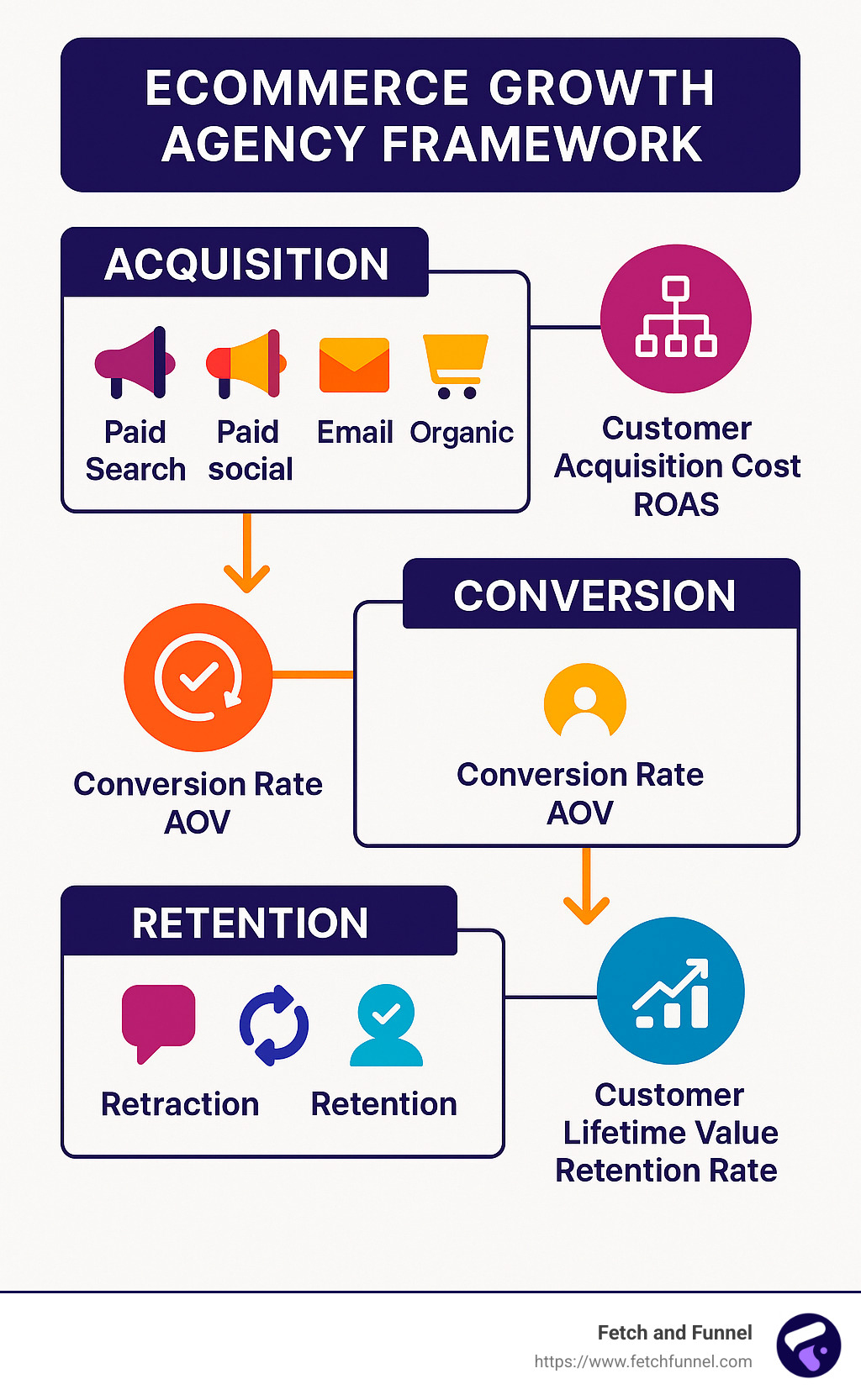
An ecommerce growth agency is a specialized partner that helps online businesses scale through data-driven strategies across multiple channels. If you’re looking for ways to accelerate your ecommerce business, here’s what you need to know:
What is an ecommerce growth agency?
– A full-service partner focused on profitable ecommerce scaling
– Combines marketing, technology, and creative expertise
– Specializes in reducing customer acquisition costs while boosting lifetime value
– Typically offers services across paid media, SEO, CRO, email/SMS, and analytics
– Works with established stores generating $300K-$2M+ annually
In today’s crowded online marketplace, standing out requires more than just a great product. The right ecommerce growth agency serves as an extension of your team, bringing specialized expertise to solve the complex challenges of scaling an online store. Unlike traditional marketing agencies, these growth partners focus specifically on the ecommerce ecosystem, with deep understanding of purchase funnels, platform nuances, and profit-first strategies.
When brands struggle with plateauing sales, rising acquisition costs, or ineffective marketing channels, an ecommerce growth agency can transform these challenges into opportunities. The best agencies don’t just drive traffic—they optimize every stage of the customer journey to maximize conversion rates and lifetime value.
According to industry data, brands working with specialized growth agencies typically experience a 40-60% increase in their first year of partnership. Some case studies even show remarkable metrics like 25× ROAS on specific channels or 168% conversion rate improvements after strategic interventions.
What separates top ecommerce growth agencies from traditional marketers is their holistic approach. Rather than focusing on isolated channels or vanity metrics, they construct complete systems for achieving profitable scale. This means aligning creative strategy, technology implementation, and performance marketing under a unified growth framework.
I’m Samir ElKamouny, founder of Fetch and Funnel, a performance-driven ecommerce growth agency that has helped scale countless online brands through data-backed strategies and innovative growth frameworks. Our approach combines conversion optimization, paid media expertise, and retention marketing to create sustainable growth systems for ecommerce businesses.
Ecommerce growth agency word list:
– ecommerce content marketing agency
– ecommerce seo marketing agency
– digital marketing services for ecommerce
What Is an Ecommerce Growth Agency?
In the vast digital marketplace where over 24 million ecommerce websites compete for attention, standing out requires specialized expertise. This is where an ecommerce growth agency comes in—not just as a service provider, but as a strategic growth partner invested in your success.

Definition of an ecommerce growth agency
Think of an ecommerce growth agency as your brand’s dedicated growth team—a multi-disciplinary group of specialists who blend strategy, creative thinking, and technology to drive profitable growth for your online store. Unlike traditional marketing agencies that spread themselves thin across various industries, these specialized partners focus exclusively on ecommerce businesses.
What makes these partnerships special is their profit-first approach. Rather than chasing vanity metrics like page views or follower counts, they build complete systems designed to achieve profitable scale. They understand that in ecommerce, everything connects—from your ad creative to your checkout experience.
“Their team is not just skilled; they’re passionate and genuinely invested in our success,” shared one client in an independent review. This sentiment captures the essence of what makes a great ecommerce growth agency relationship work—they function as a true extension of your team.
The best agencies bring specialized expertise that would be prohibitively expensive to build in-house. They combine the strategic vision of consultants with the hands-on execution capabilities of an internal team, all while maintaining the objectivity of an outside perspective. This tech-enabled, data-driven approach helps brands steer the complex landscape of online selling with confidence.
Core services every ecommerce growth agency offers
A full-service ecommerce growth agency typically covers the entire customer journey, from first impression to repeat purchase. While offerings may vary, you should expect these core capabilities:
Search Engine Optimization (SEO) forms the foundation of sustainable growth. A good agency doesn’t just optimize for keywords—they understand ecommerce-specific challenges like product page optimization, category structure, and technical issues that can hamper your visibility in search results.
Conversion Rate Optimization (CRO) transforms more of your visitors into customers. Instead of guessing what works, a proper ecommerce growth agency conducts systematic testing to improve everything from product pages to checkout flows. Learn more about Conversion Rate Optimization in Digital Marketing to understand its crucial role.
Paid Media Management isn’t just about spending money on ads. It’s about strategically allocating budget across channels like Google, Facebook, Instagram, and TikTok to acquire customers at profitable costs. Your agency should be platform-agnostic, focusing on channels that deliver results rather than those they’re most comfortable managing.
Email & SMS Marketing programs help nurture relationships with customers over time. From abandoned cart recovery to post-purchase sequences, these automated flows increase customer lifetime value through personalized communication at the right moment.
Analytics & Reporting provide the insights you need to make confident decisions. Rather than overwhelming you with data, a great ecommerce growth agency delivers actionable reports that highlight opportunities and measure progress against meaningful goals.
User Experience (UX) Design creates intuitive shopping experiences that remove friction from the buying journey. Small improvements to navigation, product pages, or checkout can dramatically impact conversion rates and customer satisfaction.
What truly distinguishes an exceptional ecommerce growth agency is how they orchestrate these services as part of a cohesive strategy. They don’t treat channels as separate silos—they understand how each element influences the others within your unique ecommerce ecosystem. This holistic approach to acquisition and retention is what ultimately drives sustainable, profitable growth for your brand.
How Ecommerce Growth Agencies Drive Profitable, Scalable Growth
The difference between struggling ecommerce brands and thriving ones often comes down to a simple equation: Visitors × Conversion Rate × Lifetime Value – Variable Costs = Profit. An ecommerce growth agency optimizes each variable in this equation to create sustainable, scalable growth.

I’ve seen it time and again – driving traffic is just the beginning of the ecommerce growth journey. Without a strategic approach to converting and retaining those visitors, you’re essentially filling a leaky bucket. As one agency founder put it, “Without strategic ecommerce marketing, an online store can become a ‘ghost town’—plenty of inventory but no customers to buy it.”
Strategy, Technology, Creative: The 3-pillar framework
The most effective ecommerce growth agencies build their approach around three interconnected pillars that work together to create a growth system greater than the sum of its parts.
The first pillar, Strategy, forms the foundation of everything else. Great agencies don’t jump straight to tactics – they start by truly understanding your customers. They invest in detailed persona development that goes way beyond basic demographics, diving deep into purchase motivations and pain points. They map customer journeys to identify friction points and conduct competitive analysis to spot market gaps you can exploit.
What I love about strategy-first agencies is how they transform this research into a custom growth roadmap. Instead of the “throw spaghetti at the wall” approach many marketers take, they create hypothesis-driven experiments with clear success metrics. Each initiative is prioritized based on potential impact and resource requirements – giving you the biggest bang for your buck.
The second pillar, Technology, is where the magic happens behind the scenes. Top ecommerce growth agencies have developed proprietary tools because they’ve found that off-the-shelf solutions often don’t provide the ecommerce-specific insights needed for true optimization.
At Fetch and Funnel, for example, we’ve built custom reporting dashboards that integrate data from advertising platforms, email service providers, and ecommerce platforms to provide a unified view of performance. This technology stack allows us to unify data from multiple sources, implement proper tracking to attribute sales correctly, automate routine tasks, and enable personalization at scale across touchpoints.
The third pillar, Creative, is what your customers actually see and experience. But unlike traditional creative agencies focused on aesthetics alone, an ecommerce growth agency treats creative as a data-driven discipline. They develop ad creative specifically designed for each platform’s unique environment, website copy optimized for conversion, email templates that drive engagement, and product photography that showcases benefits rather than just features.
What sets apart the best agencies is their commitment to systematic A/B testing to identify winning messages and visuals rather than relying on subjective opinions or “gut feelings.” The creative becomes a scientific experiment rather than an artistic endeavor alone.
When these three pillars work in harmony, you get a growth system that’s sustainable and scalable. You can learn more about Conversion Rate Optimization in Digital Marketing to see how these elements interconnect in practice.
Measuring success: Metrics that matter
An ecommerce growth agency worth its salt focuses on metrics that directly impact your bottom line, not vanity metrics that look good in reports but don’t translate to profit.
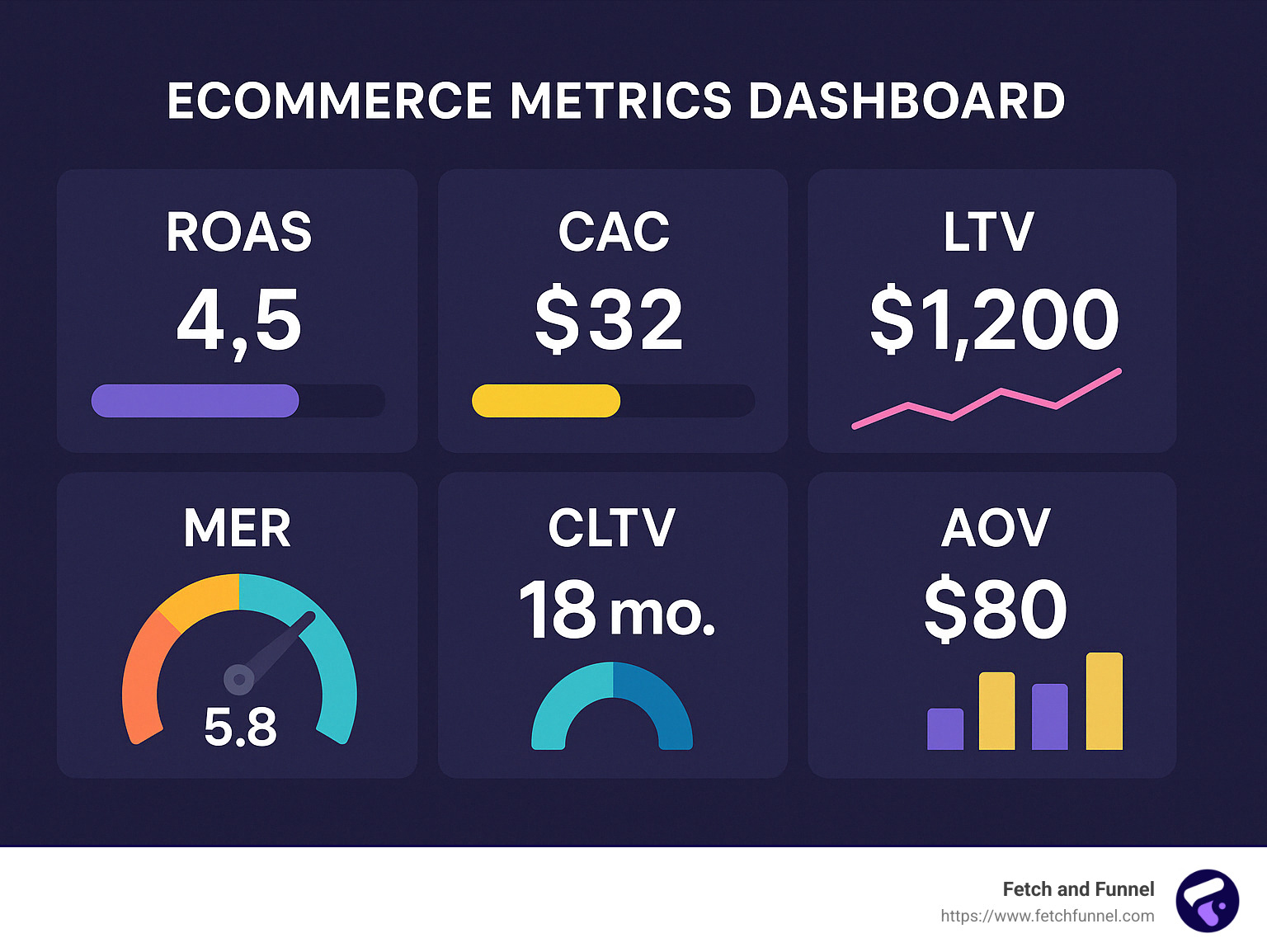
Return on Ad Spend (ROAS) shows how much revenue you generate for every dollar spent on advertising. While it’s an important metric, relying on it alone can lead to channel-specific optimization that misses the bigger picture.
That’s why sophisticated agencies also look at Marketing Efficiency Ratio (MER) – your total revenue divided by total marketing spend across all channels. This provides a more holistic view of marketing effectiveness and prevents the common problem of over-attributing success to certain channels.
Understanding Customer Lifetime Value (CLTV) transforms how you think about acquisition costs. The best agencies analyze CLTV by acquisition channel and cohort to identify which customer segments are most valuable in the long run, not just for the first purchase.
I’ve seen businesses completely transform their profitability by focusing on increasing Average Order Value (AOV). Strategic upsells and cross-sells can dramatically improve profitability without requiring more traffic or better conversion rates.
Perhaps the most insightful approach is Cohort Analysis – tracking how groups of customers acquired during specific time periods or through particular channels perform over time. This reveals trends that aggregate data often masks and allows for more precise optimization.
The most sophisticated ecommerce growth agencies go beyond these standard metrics to develop custom KPIs custom to your specific business model and goals. They build dashboards that make these metrics actionable rather than overwhelming, helping you see the forest and the trees.
By optimizing the entire customer journey – from first click to repeat purchase – an ecommerce growth agency creates a system that generates profitable growth, not just traffic. This holistic approach is what separates true growth partners from single-channel specialists or traditional marketing agencies that lack ecommerce-specific expertise.
Types of Ecommerce Growth Agencies & Choosing the Right Fit
When it comes to finding your perfect growth partner, the ecommerce agency landscape offers plenty of options. Think of it like shopping for a new car – you need to match the vehicle to your specific journey ahead. Let’s explore the different types of ecommerce growth agencies and how to find your ideal match.
When a specialized ecommerce growth agency makes sense
Sometimes, you need a surgeon rather than a general practitioner. Specialized ecommerce growth agencies excel by going deep in one area rather than broad across many. They’re laser-focused on solving specific challenges.
If your store is struggling with organic visibility despite having solid products and operations, an SEO specialist agency might be your perfect match. These partners understand the unique challenges of ecommerce SEO – from product page optimization to category structure and technical considerations that generalists often miss. We’ve seen specialized SEO partners help brands increase year-over-year organic traffic by 54%, creating a sustainable customer acquisition channel that reduces reliance on increasingly expensive paid ads.
For stores with plenty of traffic but disappointing conversion rates, CRO Labs offer specialized expertise in turning browsers into buyers. They live and breathe testing – systematically identifying friction points and resolving them through data-driven improvements. One of our retail clients worked with a CRO specialist and saw their conversion rate jump from 1.2% to 2.8% within three months – more than doubling revenue without spending an extra penny on advertising.
If you’ve built a solid customer base but struggle with retention, Email & SMS Retention Shops can work wonders. These specialists transform one-time buyers into loyal fans through sophisticated automation and personalization. They’re particularly valuable if your products naturally lend themselves to replenishment or complementary purchases. We’ve seen retention specialists help brands boost customer lifetime value by 20-50% within just a quarter through carefully crafted email and SMS strategies.
For brands facing technical limitations, Platform Developers specialize in building and optimizing ecommerce stores on platforms like Shopify, Magento, or WooCommerce. When Stanfield’s worked with platform specialists during their migration to Shopify Plus, they saw conversions increase by a stunning 168% with total transactions up 59%. Technical foundations matter more than many realize.
When to choose a full-service ecommerce growth agency
While specialists have their place, there’s something powerful about having all your growth levers pulled in harmony. A full-service ecommerce growth agency handles everything from acquisition to retention, creating a seamless customer journey.
This comprehensive approach shines when you need cross-channel coordination. The customer who sees your Facebook ad, visits your site, abandons their cart, and later opens your email doesn’t experience these as separate channels – and neither should your marketing strategy. Full-service agencies ensure your messaging and experiences feel consistent and complementary across all touchpoints.
Full-service partners also provide unified reporting that connects the dots between channels. Instead of piecing together reports from multiple specialized agencies (and inevitably finding they don’t align), you get a holistic view of performance. This clarity is invaluable for making confident decisions about where to invest next.
For brands with ambitious scale goals, having a single strategic partner overseeing all growth levers can dramatically accelerate progress. When your paid media team talks daily with your CRO and email specialists, opportunities get spotted and implemented faster. We’ve found that brands typically benefit most from this approach when they’re generating between $500K and $10M in annual revenue – big enough to need sophisticated marketing but not yet ready to build a complete in-house team.
The full-service approach also works beautifully when you lack internal marketing leadership. If you don’t have a CMO or experienced marketing director in-house, a full-service agency can provide that strategic direction across all channels, helping prioritize initiatives for maximum impact.
You can learn more about specialized approaches through our guide on Ecommerce SEO Marketing Agency services.
The right fit ultimately depends on your specific challenges, goals, and internal capabilities. Many brands start with a specialist to solve their most pressing problem, then graduate to a full-service relationship as they grow. What matters most isn’t the agency type but finding partners who truly understand your business and bring fresh perspectives to help you scale.
10 Key Criteria to Evaluate Before Hiring an Ecommerce Growth Agency
Choosing the right ecommerce growth agency is a bit like finding a business partner. You need someone who understands your vision, complements your strengths, and can help steer the challenges ahead. After helping dozens of brands find their perfect match, I’ve noticed that successful partnerships share some common foundations.
Proven Track Record
Nothing speaks louder than results. Look for agencies that proudly showcase detailed case studies relevant to your specific situation. A good agency won’t just tell you they can drive growth—they’ll show you exactly how they’ve done it for others.
“When we were evaluating partners,” one DTC brand founder told me, “the difference was clear between agencies with vague claims versus those who could walk us through specific campaigns and their measurable outcomes.”
Industry Focus
An agency that specializes in your vertical brings invaluable shortcuts to the table. They already understand your customer psychology, competitive landscape, and industry-specific challenges. While a fashion-focused ecommerce growth agency might create stunning Instagram campaigns, they might struggle with the nuances of selling technical B2B products.
Process Transparency
Great agencies can clearly explain their methodology without hiding behind jargon or “secret sauce” claims. During initial conversations, they should be able to outline their approach to your specific challenges and what the first 30-90 days will look like in practical terms.
Technology Stack
The tools an agency uses reveal a lot about their capabilities. Look for a blend of industry-standard platforms and proprietary tools they’ve developed to solve specific problems. When an ecommerce growth agency has built their own solutions, it often signals they’ve encountered limitations in off-the-shelf options and invested in overcoming them.
Senior Talent Involvement
It’s an age-old agency problem—the experienced team that impresses you during the pitch disappears once you sign, replaced by junior staff. Ask directly about who will handle your day-to-day work and how much access you’ll have to senior strategists.
Cultural Fit
You’ll be spending a lot of time communicating with your agency team, sharing challenges, and working through disagreements. Personal chemistry matters. As Antero Riihimäki noted about his agency partnership: “Their team is not just skilled; they’re passionate and genuinely invested in our success.” This kind of genuine commitment makes all the difference when facing inevitable challenges.
Contract Terms
Be wary of long-term commitments without clear exit options. The most confident ecommerce growth agencies will offer reasonable terms that give both parties flexibility. Some of our most successful client relationships at Fetch and Funnel started with smaller projects before expanding to full-service engagements as we proved our value.
Pricing Model
Understand exactly how the agency structures their fees. Options typically include:
- Monthly retainers based on scope of work
- Performance-based fees tied to specific outcomes
- Hybrid models combining base fees with performance incentives
Each model creates different incentives, so choose one aligned with your priorities. For example, pure performance-based pricing might lead an agency to focus only on short-term wins at the expense of long-term brand building.
Communication Cadence
Clarify expectations around reporting and updates from day one. How often will you receive performance reports? Who will be your main contact? What’s the typical response time for questions? The best ecommerce growth agencies are proactive communicators who don’t wait for you to ask for updates.
Scalability
Your growth partner should be able to evolve with your business. What works for your current $1M revenue may not be sufficient at $10M. Ask about their experience guiding brands through major growth phases and how their approach adapts as businesses scale.
Questions to ask a prospective ecommerce growth agency
The initial conversations with potential agencies reveal a lot about how they think and operate. I’ve found these questions particularly revealing:
When discussing experience, ask: “Can you share case studies for brands similar to mine in size, industry, and growth stage?” Pay attention to whether they talk in generalities or specifics. Then follow up with: “What happened when a strategy wasn’t working as expected for that client?” This reveals how they handle inevitable setbacks.
For strategy discussions, try: “How do you determine which growth levers to prioritize first?” Their answer will show whether they take a thoughtful, data-driven approach or just follow the same playbook for every client.
Regarding measurement, ask: “How will we define success beyond standard metrics like ROAS?” Sophisticated ecommerce growth agencies look beyond surface-level metrics to what truly drives profitable growth for your specific business model.
Finally, to understand the working relationship, ask: “What does onboarding look like, and what do you need from my team to ensure success?” Great agencies will be clear about their expectations and what they need from you to deliver results.
Red flags and potential risks
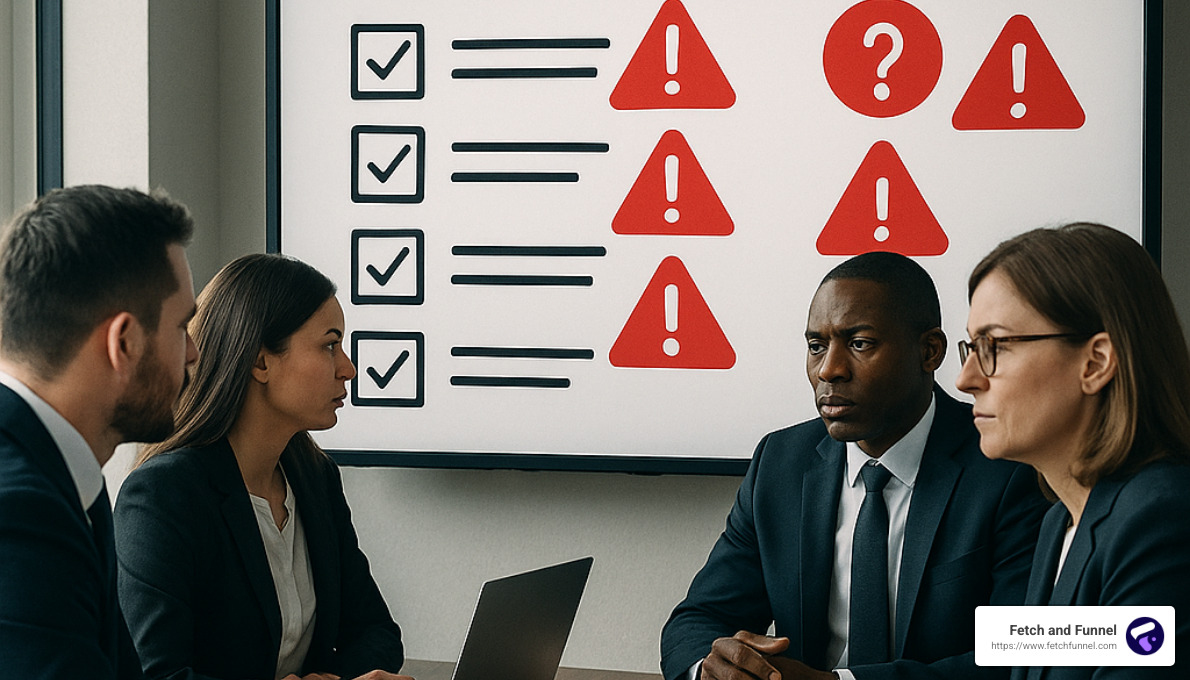
After years in this industry, I’ve seen certain warning signs that consistently predict troubled agency relationships:
Cookie-cutter proposals that could apply to any business suggest the agency hasn’t really analyzed your specific situation. Every growth strategy should be custom to your unique challenges and opportunities.
Beware of vanity metrics emphasized over profit-focused KPIs. It’s easy to make impressions or click numbers look good while your bottom line suffers. The best ecommerce growth agencies focus relentlessly on metrics that directly impact your profitability.
Unrealistic promises like guaranteed rankings or immediate ROAS improvements should set off alarm bells. Ethical agencies acknowledge that growth involves testing and optimization, not magic formulas.
Long lock-in contracts without performance clauses often indicate an agency that’s more focused on securing your business than earning it continuously through results.
Lack of ecommerce specialization is particularly problematic. General marketing agencies rarely understand the nuances of product merchandising, conversion optimization, and customer lifetime value strategies that drive ecommerce success.
Perhaps most telling is poor communication during the sales process. If they’re slow to respond or vague with answers before you’re paying them, imagine how they’ll behave once they’ve secured your business.
Finding the right ecommerce growth agency takes time and careful evaluation, but the impact on your business makes this diligence worthwhile. The best partnerships feel less like a vendor relationship and more like gaining an experienced growth department that happens to sit outside your organization.
The Engagement Journey: From Finding Call to Continuous Optimization
Working with an ecommerce growth agency isn’t just a transaction—it’s a collaborative journey that evolves over time. Understanding what this partnership looks like helps set realistic expectations and lays the groundwork for success from day one.
When you first team up with an agency like ours, we don’t just dive in with tactics. We take time to understand your business, your customers, and your unique challenges. This thoughtful approach ensures we’re building strategies that actually work for your specific situation, not just applying a one-size-fits-all template.
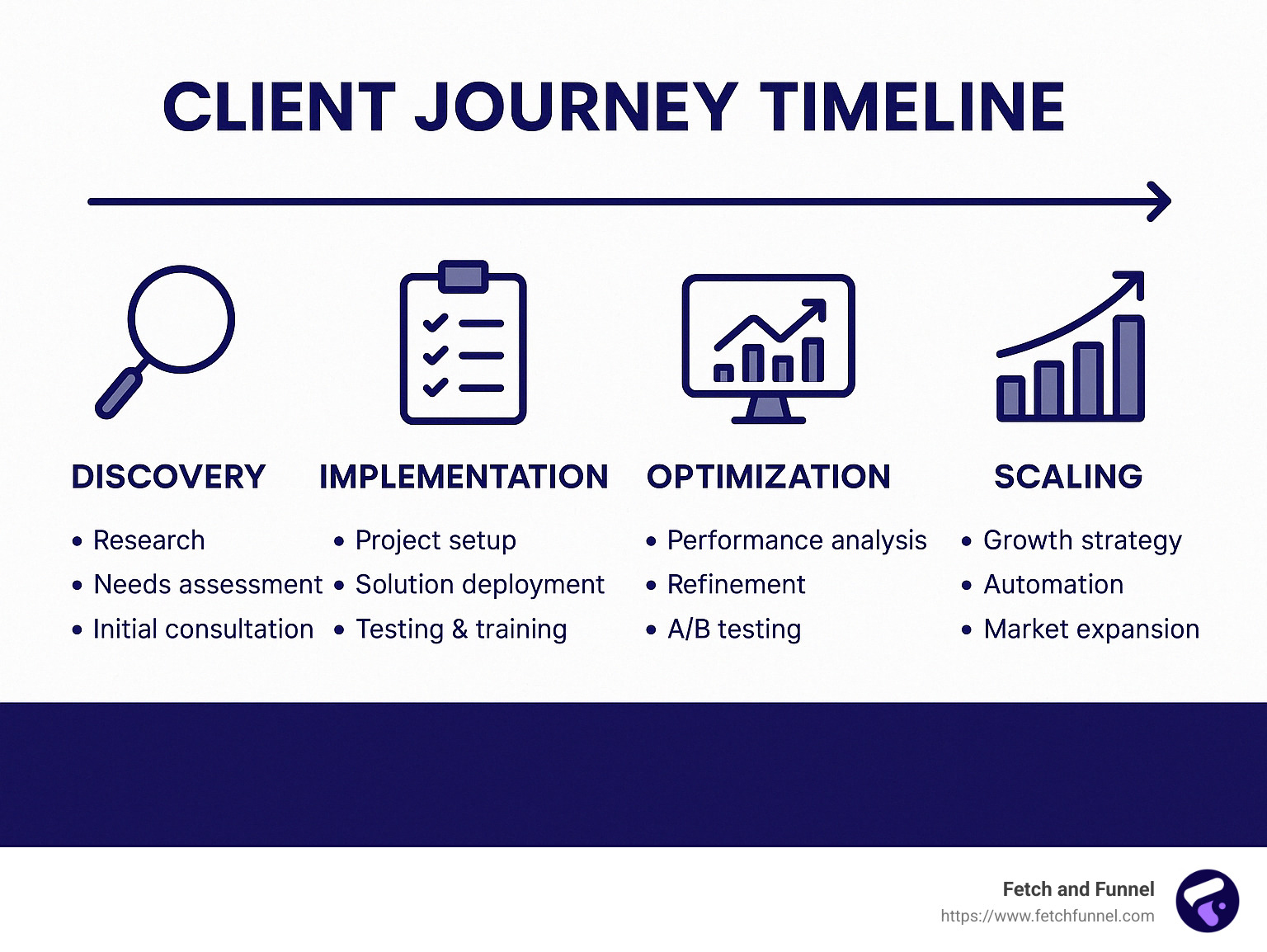
Typical 90-day rollout with an ecommerce growth agency
The first three months with your ecommerce growth agency follow a natural progression that balances quick wins with building a solid foundation for long-term growth.
During Weeks 1-2, we focus on findy and audit. This is where we roll up our sleeves and dig into your data, analyzing your current performance across all channels. We’ll conduct technical audits of your website, verify your analytics setup, and make sure your conversion tracking is accurate (you’d be surprised how often it isn’t!). We also spend time understanding your customers through research and identifying opportunities by analyzing your competitors. Most importantly, we make sure we’re aligned on goals and KPIs so everyone’s working toward the same north star.
By Weeks 3-4, we’ve developed a customized growth roadmap based on what we learned during the audit phase. We establish baseline metrics so we can accurately measure progress, develop initial creative concepts, and set up proper tracking infrastructure. We’ll also implement some quick wins to generate early momentum—because who doesn’t love seeing positive results right away?
During Weeks 5-8, we move into initial implementation and testing. This is where the rubber meets the road as we launch prioritized initiatives across channels, begin A/B testing creative concepts and landing pages, and refine audience targeting based on early data. We’ll optimize existing flows and funnels while conducting weekly performance reviews to make necessary adjustments. It’s an exciting time as we start seeing what resonates with your customers!
By Weeks 9-12, we’re focused on optimization and planning for scale. We analyze test results to refine our strategy, scale successful initiatives while pausing underperformers, and develop next-phase priorities based on what we’ve learned. We’ll conduct a comprehensive performance review comparing results to our baseline metrics and create a plan for sustainable growth in the coming months.
As Matthew Murray, COO & CMO at Love Wellness, shared about his agency experience: “Through the ups and downs, the team’s commitment to listening, collaborating, and pushing the envelope with out-of-the-box growth tactics is what has kept me engaged.”
You can learn more about our comprehensive approach through our Ecommerce Marketing Agency services page.
Maintaining alignment with your ecommerce growth agency
The key to long-term success isn’t just finding the right ecommerce growth agency—it’s maintaining a productive relationship over time. Here’s how we keep the partnership strong and effective:
Weekly stand-ups keep everyone on the same page without wasting time. These brief, focused meetings help us review performance, address any roadblocks, and align on priorities for the coming week. We keep these action-oriented rather than turning them into lengthy reporting sessions—because your time is valuable.
Access to real-time dashboards eliminates surprises and enables quick course corrections. At Fetch and Funnel, we provide dashboards that translate complex data into insights you can actually use. No more waiting for reports to make decisions—you’ll have the data at your fingertips whenever you need it.
Our monthly deep dives look beyond week-to-week fluctuations to identify meaningful trends and strategic opportunities. These sessions balance tactical optimizations with bigger-picture discussions about where we’re headed. It’s a chance to zoom out and make sure the day-to-day work is adding up to significant progress.
Every quarter, we conduct strategy resets to reassess the overall growth approach based on accumulated data and changing market conditions. These sessions ensure your growth roadmap stays relevant and effective as your business evolves and the market shifts.

At Fetch and Funnel, we’ve found that transparency forms the foundation of successful agency relationships. Our clients have 24/7 access to performance dashboards, and we prioritize honest communication about both wins and challenges. We celebrate successes together, but we’re also upfront when something isn’t working so we can pivot quickly. This approach builds trust and ensures we’re always aligned on what matters most—growing your business profitably and sustainably.
Common Challenges Solved & Real-World Wins
Every ecommerce brand eventually hits roadblocks on their growth journey. Rising customer acquisition costs, stagnant conversion rates, and one-time purchasers are just a few of the common challenges that can stall even the most promising online stores. This is where an ecommerce growth agency proves its true value – by changing these obstacles into stepping stones for sustainable growth.
Case study snapshots: From stuck to scale
Traffic Plateau Despite Increasing Ad Spend
Remember when iOS 14 privacy changes sent Facebook advertisers into a tailspin? That’s exactly what happened to a home fragrance brand we worked with. Their ad costs were climbing steadily while traffic growth hit a wall. Their in-house team was struggling to steer the new digital landscape.
Rather than simply pumping more money into the same channels, our ecommerce growth agency approach completely reimagined their acquisition strategy. We restructured their ad account to focus on broad targeting paired with scroll-stopping creative that actually resonated with their audience. But we didn’t stop there – we developed a robust content strategy to build organic traffic through SEO and identified Pinterest as an untapped opportunity with high purchase intent for their specific products.
The results spoke volumes: 25× ROAS on their Pinterest campaigns within just three months, a 30% reduction in their overall customer acquisition costs, and a 54% year-over-year boost in organic traffic. As their marketing director told us, “We were stuck in a cycle of diminishing returns until our agency helped us diversify beyond Facebook. The Pinterest strategy alone transformed our business.”
Low Conversion Rates Despite Quality Traffic
Beautiful websites don’t always translate to sales – something an apparel retailer finded the hard way. Despite driving significant traffic to their site, their conversion rates were well below industry benchmarks. Their visually stunning but complex site design was actually creating friction in the purchase journey.
Our ecommerce growth agency team tackled this challenge by starting with a comprehensive UX audit that pinpointed the exact moments where potential customers were abandoning the purchase process. We then implemented a series of A/B tests focusing on simplified checkout flows, mobile-specific optimizations (crucial for their growing segment of smartphone shoppers), and strategically placed social proof elements to build confidence at key decision points.
The change was remarkable: an 11% increase in overall conversion rate, 7% reduction in bounce rate, and a 20% growth in average order value through carefully designed cross-selling opportunities. Small changes with enormous impact on the bottom line.
Single-Purchase Customers with Low Lifetime Value
A beauty brand was winning at customer acquisition but failing at retention. Most customers made a single purchase and never returned, creating an unsustainable business model where acquisition costs could never be fully recouped.
Our retention-focused strategy addressed this challenge from multiple angles. We developed segmented email flows based on purchase history and browsing behavior, implemented post-purchase nurture sequences highlighting complementary products, created a loyalty program that actually motivated repeat purchases, and developed subscription options for their replenishable products.
Within three months, customer lifetime value increased by 20-50%, the percentage of customers making a second purchase more than doubled (from 15% to 35%), and subscription revenue grew to represent a quarter of their total revenue. By shifting focus from acquisition to retention, we transformed their entire business model.
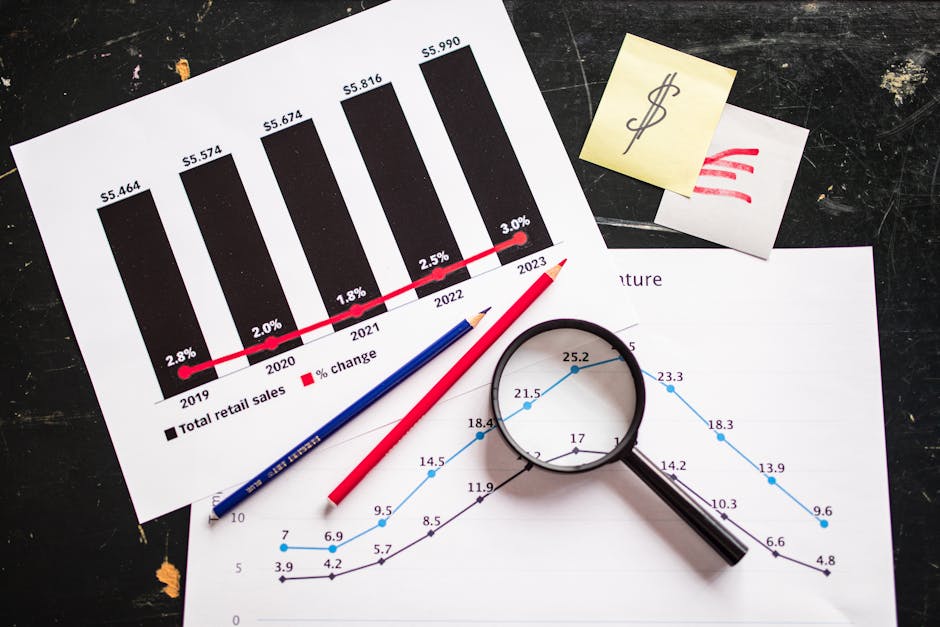
What these case studies demonstrate is how an ecommerce growth agency approaches challenges holistically rather than applying quick fixes. The most impressive results come from addressing root causes rather than symptoms – treating the disease, not just the fever.
Future trends ecommerce growth agencies are tackling now
The digital landscape never stands still, and neither do the best growth agencies. At Fetch and Funnel, we’re already helping our clients steer the emerging trends that will shape ecommerce success in the coming years:
AI Personalization at Scale
The days of one-size-fits-all shopping experiences are over. We’re using machine learning to create truly personalized customer journeys based on real-time behavior, purchase history, and predictive modeling. This goes far beyond basic “you might also like” recommendations to deliver customized experiences from first click to post-purchase follow-up.
Cookieless Tracking Solutions
With privacy regulations tightening and third-party cookies disappearing, we’re developing alternative attribution models using first-party data, server-side tracking, and probabilistic matching. These approaches maintain marketing effectiveness while respecting user privacy – a balance that’s becoming increasingly crucial.
Retail Media Network Integration
Platforms like Walmart Connect, Instacart, and Target Roundel are becoming powerhouses in the digital advertising space. We’re helping brands capitalize on these high-intent shopping environments through optimized listings and strategic advertising that reaches consumers at the moment they’re ready to buy.
Cross-Border Growth Strategies
The world is your marketplace. We’re helping brands expand internationally with localized experiences, currency optimization, and market-specific strategies that respect cultural nuances while maintaining brand consistency. What works in Boston won’t necessarily work in Berlin or Bangkok – and we know how to steer those differences.
At Fetch and Funnel, we’re particularly focused on helping our Boston-based clients and national brands stay ahead of these trends. Our team constantly tests emerging technologies and platforms to identify opportunities before they become mainstream – because by the time everyone’s talking about a new channel or strategy, the early-mover advantage is already gone.
Frequently Asked Questions about Ecommerce Growth Agencies
What signs show my brand is ready to hire an ecommerce growth agency?
You know that feeling when you’re pushing harder on the gas pedal but your car isn’t going any faster? That’s exactly what happens to many ecommerce brands before they seek outside help.
If you’re experiencing a plateau or decline in growth despite pouring more resources into marketing, it’s often a sign you’ve reached the ceiling of your current approach. As one ecommerce founder told us recently, “We knew we needed an agency when we realized we were spending more time figuring out marketing than developing our products.”
Rising customer acquisition costs without a corresponding increase in lifetime value is another clear indicator. This cost creep can slowly eat away at your margins until what once was profitable becomes unsustainable.
You might also be ready for an agency partnership when you’re launching into new markets or product categories. These expansions often require specialized knowledge that goes beyond your team’s existing expertise.
Many successful brands reach out when they realize they lack specialized expertise in-house for critical channels. Maybe you’re great at email marketing but struggle with paid social, or your SEO needs professional attention.
If you’re spending more than $10,000 monthly on advertising without clear visibility into performance, you’re likely leaving money on the table. An experienced agency can help you squeeze more value from every dollar spent.
Finally, when you find yourself regularly running out of bandwidth to execute marketing initiatives while managing other aspects of your business, it’s probably time to bring in reinforcements.
How do agencies price their services—retainers, performance, or hybrid?
Let’s talk money—because understanding agency pricing models helps you budget appropriately and avoid surprises.
Most ecommerce growth agencies use one of three approaches:
Monthly Retainers provide predictability for both you and the agency. These fixed monthly fees typically range from $2,000 for smaller brands to $15,000+ for established ecommerce businesses with complex needs. Retainers work well when you need comprehensive, ongoing support across multiple channels.
Performance-Based pricing directly ties the agency’s compensation to results—often structured as a percentage of revenue or profit generated. This model beautifully aligns incentives but can sometimes lead to higher costs as you scale. It’s worth noting that truly performance-based models (not just discounted retainers with bonuses) are relatively rare in the industry.
Hybrid Models offer the best of both worlds by combining a base retainer with performance incentives. This balanced approach ensures the agency can cover their core costs while still rewarding exceptional results. At Fetch and Funnel, we typically recommend this model as it creates a true partnership mentality.
Many agencies also require a one-time setup fee ranging from $2,500 to $10,000 to cover initial audits, strategy development, and implementation costs. While this might seem like a hefty upfront investment, it’s crucial for building proper foundations for long-term success.
Can I work with an agency if I already have an in-house marketing team?
Absolutely—and I’d go further to say that some of our most successful partnerships at Fetch and Funnel happen when we complement existing in-house teams.
Think of it like bringing in specialized consultants to work alongside your team rather than replacing them. Your in-house marketers bring invaluable knowledge about your brand, products, and customers that no outside partner could match. Meanwhile, the agency brings specialized expertise and perspective from working across multiple brands and industries.
This collaboration typically works in several ways:
Your team might handle day-to-day execution while the agency provides strategic guidance and specialized expertise. This works particularly well for brands with strong operational teams that need help with direction and innovation.
In other cases, the agency focuses on filling skill gaps in your marketing stack. Perhaps you have strong email marketers in-house but need help with TikTok ads or technical SEO.
Many brands use agencies as a capacity extension, allowing their internal team to focus on core business areas while the agency manages growth experiments and new channel development.
The best agency partnerships also include knowledge transfer, where the agency trains your team on best practices and emerging strategies, gradually building internal capabilities.
As one marketing director shared with us: “Our agency isn’t replacing our team—they’re extending our capabilities and bringing specialized expertise we couldn’t afford to hire full-time.”
The key to making this relationship work is clear role definition and open communication from day one. When everyone understands their responsibilities and how to collaborate effectively, the combined force of your in-house team and agency partner can drive remarkable growth.
Conclusion
The journey from ecommerce struggle to sustainable success isn’t about finding magic bullets or overnight fixes. It’s about building systems for profitable scale—and that’s precisely what a specialized ecommerce growth agency delivers.
When you look at the most successful brand-agency partnerships, certain elements consistently shine through: aligned incentives that put your goals first, transparent communication that builds trust, data-driven decisions that remove guesswork, and a focus on creating long-term value rather than chasing quick wins. When these elements come together, the results can truly transform your business.
The case studies and industry data we’ve explored show just how powerful the right ecommerce growth agency partnership can be. Imagine reducing your customer acquisition costs while simultaneously watching your conversion rates climb. Picture converting one-time buyers into loyal, repeat customers who champion your brand. Envision having sustainable growth systems that scale predictably as your business expands, turning complex data into clear, actionable insights that drive continuous improvement.
At Fetch and Funnel, we’ve walked this path with numerous Boston-based and national ecommerce brands. Our team brings together deep expertise in conversion optimization, creative strategy, and performance marketing to build growth systems that last. We don’t just implement tactics—we create comprehensive frameworks that transform how your business acquires and retains customers.
Perhaps you’re facing plateauing sales despite increasing your marketing budget. Maybe your acquisition costs keep climbing while your margins shrink. Or possibly your marketing channels just aren’t delivering the results they once did. Whatever challenge you’re facing, the right growth partner can help you turn these obstacles into stepping stones toward greater success.
The key is finding an agency whose approach, expertise, and values truly align with your business goals—a partner who feels like an extension of your team rather than just another vendor.
Ready to explore how an ecommerce growth agency partnership could accelerate your brand’s journey from zero to hero? Learn more about our ecommerce growth services or reach out for a conversation about your specific growth challenges.

The path to ecommerce success rarely follows a straight line, but with the right growth partner by your side, it becomes significantly more navigable. In today’s increasingly competitive landscape, the question isn’t whether you can afford to invest in an agency partnership—it’s whether you can afford not to.