Why Full Stack Web3 Development is the Future of the Internet
Full stack Web3 development is the process of building decentralized applications (dApps) on blockchain networks. Unlike traditional web development, it involves:
- Smart contracts – Self-executing code on a blockchain (like Ethereum) that replaces a backend server.
- Decentralized storage – Using protocols like IPFS or Arweave instead of cloud databases.
- Wallet integration – Users authenticate with crypto wallets, not usernames and passwords.
- Frontend development – Building user interfaces with frameworks like React or Next.js that connect to blockchains.
- Data indexing – Using tools like The Graph Protocol to query blockchain data efficiently.
The Web3 market is exploding, projected to grow from $3.1 billion in 2023 to $108.4 billion by 2030 (a 64.4% CAGR). Demand for developers has surged, with job postings up over 50% in two years and salaries from $112,550 to $159,163 per year.
But Web3 development is still in its infancy. As one developer noted, “You know that feeling when you’ve spent three hours troubleshooting a smart contract only to realize your wallet integration was broken the whole time? Yeah, Web3 development in 2025 still has those moments.”
The ecosystem requires reinventing wheels. Traditional Web2 tools are incompatible because dApps replace the typical database/API model. Data is distributed, backend logic becomes smart contracts, and users control their data with cryptographic keys.
This guide will take you from zero knowledge to building your first complete dApp. You’ll learn the core technologies, connect frontends to smart contracts, master deployment, and find career opportunities in this rapidly growing field.
I’m Samir ElKamouny, founder of Fetch and Funnel. We help businesses leverage cutting-edge tech like Full stack Web3 development to drive growth. I’ve seen how Web3 is creating unprecedented opportunities for builders and businesses.
The Anatomy of a Web3 Application

At its heart, a Web3 application is a symphony of interconnected technologies designed for a decentralized, transparent, and user-centric experience. The core components of a full stack Web3 application include:
Core Components:
- Blockchain Layer: The foundational distributed ledger where all transactions are recorded and secured. It’s the application’s ultimate source of truth.
- Smart Contract Layer: Self-executing code on the blockchain that defines the dApp’s business logic and rules, replacing traditional backend servers.
- Frontend Layer: The user interface (UI) and user experience (UX) built with web technologies to communicate with the blockchain and smart contracts.
- Data Layer: Handles decentralized data storage and retrieval, ensuring it’s censorship-resistant and often immutable.
- Indexing Layer: Organizes and makes raw blockchain data easily accessible for the frontend, overcoming slow query times.
The advantages of full stack Web3 applications are profound: transparency (all logic is publicly verifiable), censorship resistance (no single entity can shut it down), and user control over their data, breaking free from Web2’s centralized silos.
For a deeper dive, explore resources like Defining the web3 stack, which details the relationships between these layers.
Web2 vs. Web3: A Paradigm Shift
To appreciate full stack Web3 development, it helps to understand its divergence from Web2. Their underlying philosophies and architectures are worlds apart.
| Feature | Web2 Stack | Web3 Stack |
|---|---|---|
| Frontend | React, Angular, Vue.js | React, Next.js, Angular |
| Backend Logic | Centralized Servers (Node.js, Python, PHP) | Smart Contracts (Solidity, Rust) on Blockchain |
| Database | Centralized Databases (SQL, NoSQL) | Blockchain Ledger, Decentralized Storage (IPFS/Arweave), Indexers (The Graph) |
| Authentication | Usernames/Passwords, OAuth | Cryptographic Wallets (MetaMask, Ledger) |
| Data Ownership | Owned by Companies | Owned by Users (via cryptographic keys) |
| Trust Model | Trust in Centralized Authority | Trust in Code (decentralized, verifiable) |
| Architecture | Centralized, Single Point of Failure | Decentralized, Distributed, Resilient |
In Web2, we trust centralized servers, leaving our data at a company’s mercy. Web3 flips this model: data is distributed, logic is handled by immutable smart contracts, and users control their identity with cryptographic keys. It’s a shift from trusting institutions to trusting verifiable code.
Key Differences in Full stack Web3 development
The shift from Web2 to Web3 brings significant technical differences in full stack Web3 development:
- Stateful vs. Stateless Backends: Unlike stateless Web2 backends, Web3 smart contracts maintain a persistent, publicly verifiable state on the blockchain, updated only through predefined functions.
- Immutability: Once deployed, smart contracts and their transactions are generally immutable. Their code cannot be changed, providing a high degree of trust, unlike Web2 server code that can be updated anytime.
- Transaction-Based Interactions: Every state-changing interaction with a smart contract is a transaction requiring a user’s cryptographic signature and a gas fee to compensate the network.
- User-Controlled Identity via Wallets: Users manage their identity and access dApps via a cryptographic wallet. This gives them direct ownership and control over their digital assets and interactions, shifting power to the user.
The Essential Toolkit for Full stack Web3 development
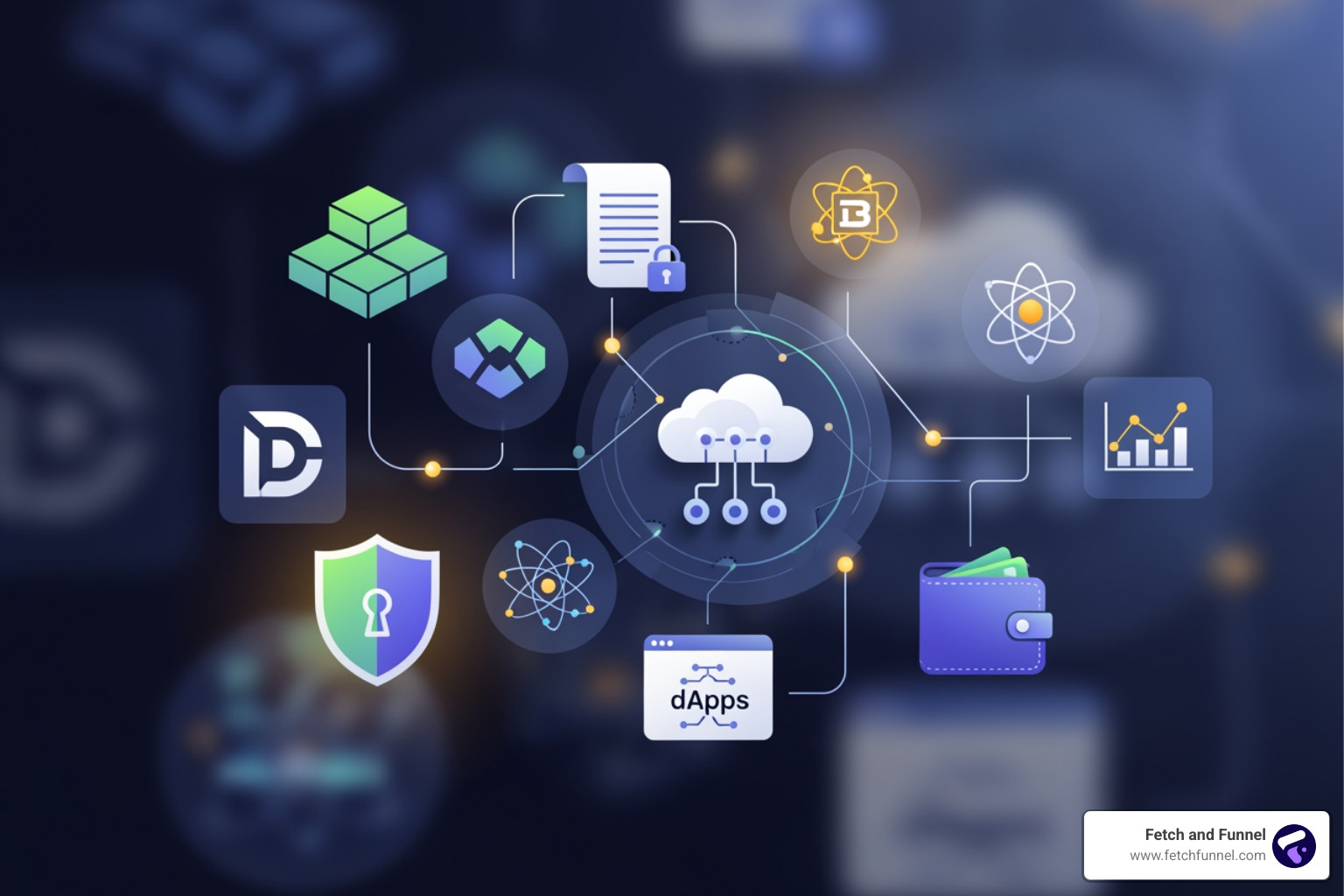
Building a full stack Web3 application requires a specialized toolkit to bridge traditional web development with the decentralized world. Here’s a breakdown of the essentials:
Backend: Smart Contracts and Blockchain Logic
The Web3 backend relies on smart contracts that live on a blockchain.
- Smart Contract Languages: Solidity is the most popular language for writing smart contracts on Ethereum and EVM-compatible chains. Other chains might use Rust (Solana).
- Development Environments: Hardhat is a widely used Ethereum development environment for writing, compiling, testing, and deploying contracts. It offers great flexibility and a local test network. Foundry is a fast, modern alternative.
- Blockchain Platforms: The Ethereum Virtual Machine (EVM) is the runtime environment that executes smart contracts. It powers Ethereum and many EVM-compatible chains like Polygon, Avalanche, and Binance Smart Chain.
- Layer-2 Solutions: L2s like Polygon, Optimism, and Arbitrum address Ethereum’s high gas fees and slow speeds by processing transactions off-chain. Polygon is a prominent choice for its low costs and wide adoption.
- Contract Libraries: To ensure security, we leverage libraries like @openzeppelin/contracts. They provide battle-tested, reusable implementations of common standards (e.g., ERC-20, NFTs), saving time and reducing vulnerabilities.
Frontend: Building the User Interface
The frontend is where we craft the user experience, with the crucial twist of connecting to the blockchain.
- UI Frameworks: React and Next.js are top choices for building dynamic dApp user interfaces. React offers a robust component architecture, while Next.js adds performance and SEO benefits.
- Blockchain Interaction Libraries: JavaScript libraries like Ethers.js enable the frontend to communicate with smart contracts. It provides a comprehensive way to send transactions and read data. Newer alternatives include Wagmi and Viem.
- Wallet Connection Tools: Libraries like web3modal simplify connecting a user’s crypto wallet (e.g., MetaMask) to the dApp, providing a seamless user experience.
Data & Storage: The Decentralized Backbone
Web3 uses decentralized solutions for data persistence and retrieval.
- Decentralized Storage: For censorship-resistant file storage, we use networks like IPFS, a peer-to-peer protocol, or Arweave for permanent storage. We often store the content on IPFS and anchor its unique hash on the blockchain.
- Data Indexing: Querying the blockchain directly is slow. Indexing protocols like The Graph Protocol organize blockchain data into easily queryable GraphQL APIs, essential for dynamic UIs. Ponder is a newer, lightweight alternative.
- Node Providers: Instead of running a full blockchain node, services like Infura and Alchemy provide reliable, high-performance API access to blockchain networks, handling the complex infrastructure overhead.
From Code to DApp: A Practical Walkthrough
Let’s walk through the practical steps of bringing a full stack Web3 application from concept to reality.
Step 1: Connecting Your Frontend to the Blockchain
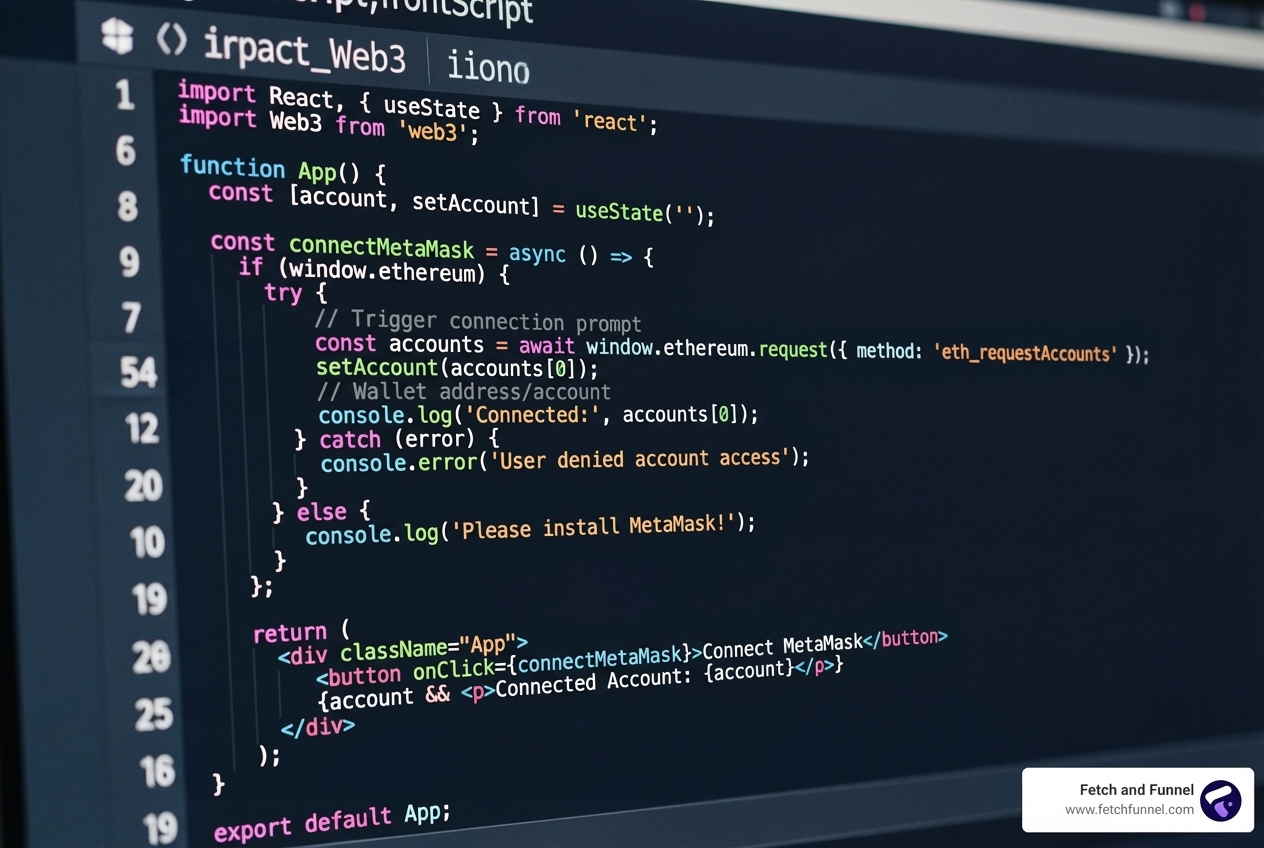
This is where you enable your frontend to interact with the immutable logic on the blockchain.
- Wallet Providers: Your dApp must first detect and connect to a user’s Web3 wallet (like MetaMask). Libraries like
web3modalsimplify this by providing a connection modal. The wallet then injects a provider (window.ethereum) for blockchain interaction. - Instantiating a Contract: To interact with a smart contract, your frontend needs its Address (where it is on the blockchain) and its ABI (Application Binary Interface), a JSON file describing its functions. Using a library like Ethers.js, you can create a contract instance.
- Calling Contract Functions:
- Reading Data (View/Pure Functions): These functions read data without modifying the blockchain state. They are free to call and are used to display information like token balances.
- Sending Transactions (State-Changing Functions): Functions that modify the blockchain (e.g., transferring tokens) require a transaction. The user must sign it with their wallet and pay a gas fee. Your frontend prompts the user, broadcasts the transaction, and waits for confirmation. Libraries like Wagmi and Viem offer React hooks (
useContractRead,useContractWrite) to streamline these interactions.
Step 2: The Deployment Pipeline
Once your code is ready, it’s time to deploy your full stack Web3 application to a live network.
- Compiling Contracts: Your Solidity code is compiled into bytecode (for the EVM) and the ABI using tools like Hardhat or Foundry.
- Running Tests: Rigorous testing is paramount before deployment. Use frameworks like Hardhat or Foundry to run unit and fuzz tests to ensure contract security and prevent irreversible bugs.
- Deploying to a Testnet: First, deploy to a testnet like the Mumbai Testnet for Polygon. This allows for thorough public testing without real-world economic risk.
- Getting Testnet Funds: To pay for gas fees on a testnet, get free test tokens from a service like the Polygon Faucet.
- Deploying to Mainnet: After successful testnet validation, deploy to the live mainnet. This step requires real cryptocurrency for gas fees.
- Verifying Contracts on Etherscan (or PolygonScan): After deploying, verify your contract’s source code on a blockchain explorer like PolygonScan. This improves transparency and user trust.
- Hosting the Frontend: Your frontend application (React/Next.js) needs to be hosted. Platforms like Vercel or Netlify integrate with Git for continuous deployment. For maximum decentralization, some host on IPFS.
The Broader Web3 Ecosystem and Your Place In It
Full stack Web3 development is about understanding a rapidly evolving ecosystem and finding your niche.
Common Use Cases and Examples
Web3 applications are expanding rapidly. Here are some common use cases:
- DeFi (Decentralized Finance): Alternatives to traditional financial services without intermediaries, like decentralized exchanges (Uniswap) and lending platforms (Aave).
- NFTs (Non-Fungible Tokens): Verifiable digital ownership for art, collectibles, and gaming assets. Developers build marketplaces and minting platforms.
- DAOs (Decentralized Autonomous Organizations): Organizations governed by code and community members, requiring smart contracts for voting and treasury management.
- Gaming (GameFi): Integrates blockchain to give players true ownership of in-game assets and enable play-to-earn models.
- Decentralized Social Media: Platforms where users own their data and content, with minimized censorship.
Challenges and Key Considerations
While promising, Web3 has inherent challenges.
- Security Vulnerabilities: Smart contract bugs are permanent and can be exploited, making security auditing critical. While tools like OpenZeppelin contracts help, custom code requires rigorous auditing.
- Scalability (The Trilemma): Blockchains struggle to balance decentralization, security, and scalability. Layer-2 solutions like Polygon help but add complexity.
- User Experience (UX) Problems: Web3 can be daunting for new users due to wallets, gas fees, and complex transactions. Improving UX is a major focus for developers.
- Gas Fees: Blockchain interactions incur gas fees, which can be expensive. Gas optimization and deploying on L2s are common mitigation strategies.
- Data Persistence: Ensuring data remains available on decentralized storage like IPFS can be a challenge. Solutions like Arweave offer permanence at a cost.
- Lack of Mature Tooling: The ecosystem is still maturing, and developers often have to “reinvent wheels” because Web2 tools are insufficient.
For those interested in how these applications reach their audience, understanding Web3 Social Media Marketing is also a crucial aspect.
The Role of AI in Enhancing Web3 Development
Artificial Intelligence is becoming a powerful ally in full stack Web3 development.
- AI for Code Generation: Tools like GitHub Copilot assist in writing Solidity and JavaScript, suggesting code snippets and speeding up development.
- AI for Smart Contract Auditing: AI can help identify security vulnerabilities. Tools like GuardRail AI automate checks, reducing the risk of exploits.
- AI for Debugging: AI-assisted coding in environments like Remix IDE can provide real-time alerts and suggestions, making debugging more efficient.
- AI-Powered Testing: AI can generate test cases and assist in fuzz testing (feeding random inputs to find bugs), improving contract robustness.
Career Opportunities in Full stack Web3 development
The Web3 market’s growth has created booming demand for skilled developers.
- Job Roles: A diverse range of roles is emerging, including Smart Contract Engineer, DApp Developer, Blockchain Engineer, and specialized Frontend/Backend Web3 Developers.
- Salary Statistics: Compensation is high, reflecting demand. A Full Stack Web3 Developer averages $112,550 to $159,163 per year.
- Market Growth: The global blockchain market is projected to reach $162.10 billion by 2032. The Web3 market itself is expected to grow at a staggering 64.4% CAGR.
- Demand: Job postings for Web3 developers have increased by over 50% in two years. The number of blockchain developers is estimated to exceed 10 million by the end of 2024, ensuring ample opportunities. For those looking to stand out, understanding how to Boost your project’s visibility with Web3 SEO is invaluable.
Frequently Asked Questions about Full Stack Web3 Development
Here are answers to common questions from aspiring developers.
How long does it take to become a full stack Web3 developer?
The timeline varies based on your background. With minimal coding experience, an intensive bootcamp can take 6-7 months. If you’re already a web developer (especially with JavaScript), you could transition in 3-6 months of dedicated study. The Web3 space evolves rapidly, so continuous learning is crucial for your entire career.
Do I need to know Web2 development first?
While not strictly required, a Web2 development background is highly recommended. A strong foundation in JavaScript/TypeScript and frameworks like React is essential for frontend dApp development. Understanding client-server architecture helps in grasping how frontends interact with the blockchain. The problem-solving skills from Web2 are directly transferable and provide a powerful springboard into Web3’s unique challenges.
Is full stack Web3 development a good career?
Yes, it’s an exceptionally promising career. Key reasons include:
- High Demand: The market’s exponential growth has created a significant shortage of skilled developers.
- Lucrative Salaries: Web3 developer salaries are highly competitive, ranging from $112,550 to $159,163 annually.
- Growing Market: The Web3 market is projected to surpass $100 billion by 2030, indicating long-term stability and growth.
- Innovation: You’ll be at the forefront of building the next generation of decentralized, user-empowering applications.
A career in Web3 is ideal if you’re passionate about technology and want to build the future of the internet.
Conclusion: Start Building the Future Today
We’ve covered the landscape of full stack Web3 development, from its core components and tools to deployment and career opportunities. Web3 represents a paradigm shift toward a decentralized, user-owned internet.
The future of the web is decentralized. While the learning curve is steep and the ecosystem evolves quickly, the rewards are immense: the chance to innovate, build a more open web, and secure a high-demand career. Continuous learning is essential.
At Fetch and Funnel, we believe in Web3’s transformative power. Our expertise in digital marketing and Web3 strategy can help you bring your vision to life. To provide a comprehensive view, it’s worth noting that the landscape includes many talented firms. While our Boston-based team is ready to help you build the future, we encourage you to also explore other leading agencies like LeewayHertz and BairesDev to find the perfect partner for your project. Partner with a leading Web3 Development Agency and let’s create something extraordinary.